Color Clash
VOODOOStrategy
3.14.85K Reviews
- Version
- 1.27.0
- Installs
- 10.00M
- Age Rating
- Everyone 10+
Screenshots
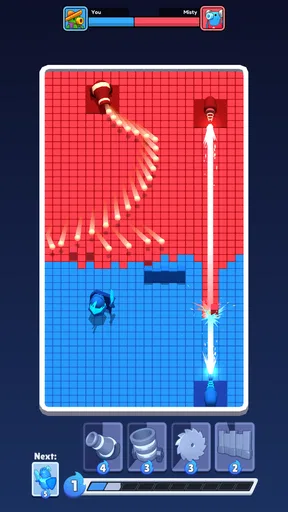
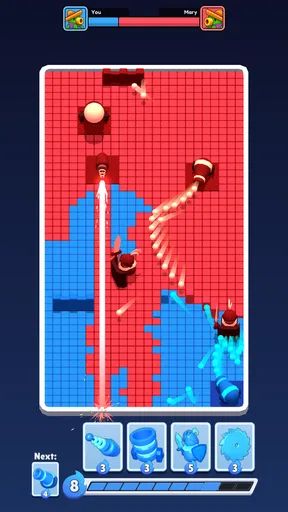
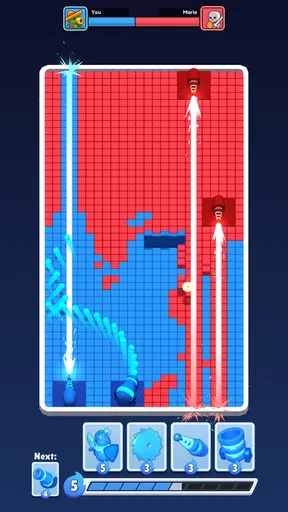
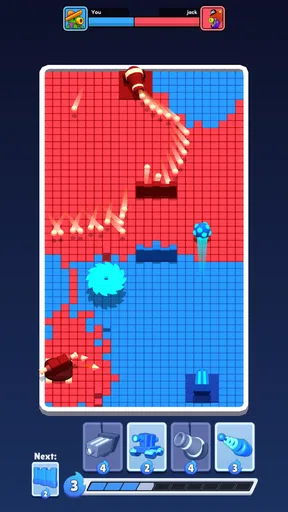
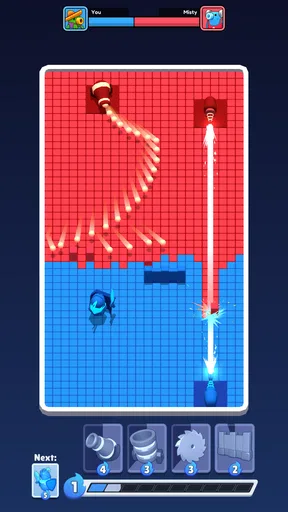
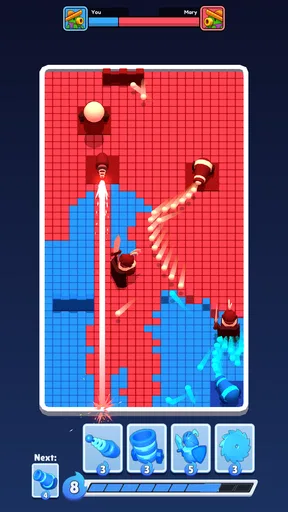
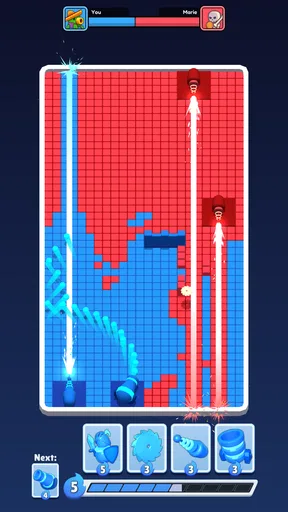
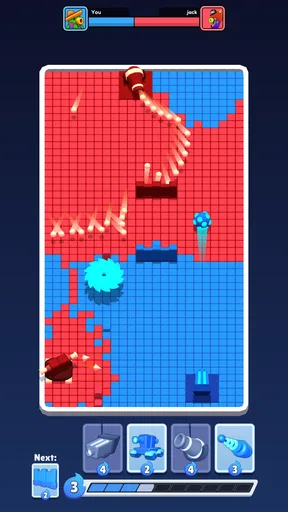
Our Review of Color Clash
 Analysis by Appyee
I went into Color Clash expecting a quick strategy game built around color, and that is exactly where it fits best: short sessions, immediate decisions, and a simple idea that becomes more demanding once the board starts filling up. VOODOO presents it as a free game for Android, with a store summary centered on painting your way to victory. After spending time with it, I think the appeal is less about deep planning and more about reading the situation quickly before a small mistake gives the other side too much room.
That distinction matters. This is not the kind of strategy game I would choose when I want a long campaign, a detailed technology tree, or a story to follow. It is closer to a compact tactical distraction that works well when I have a few spare minutes. The color-based presentation makes the rules approachable, while the competitive structure gives each round enough tension to stop it feeling like a purely decorative puzzle.
The game is free to install and rated for Everyone 10+, although optional purchases range from $0.99 to $99.99 per item. It has passed the ten-million-install mark, which tells me it has found a substantial audience despite its modest average rating of 3.1 from roughly 75 thousand ratings. I would not treat that rating as a verdict by itself, but it is a useful warning that the experience will not suit everyone, particularly players looking for a more polished or content-heavy strategy title.
How the current game feels in everyday play
I find Color Clash easiest to judge as a small, repeatable decision-making game rather than something I need to settle into for a long session. In this section, I’m focusing on how its quick rhythm fits ordinary downtime and why a little attention can make those brief matches feel more deliberate. That everyday pattern also gives useful context for considering what the current release does—and does not—change.
Simple rules, quicker decisions
The strongest part of Color Clash is how quickly I can understand what I am supposed to do. The color theme is not buried under a complicated interface, so I can begin playing without studying a long tutorial or memorizing a collection of systems. That makes it a good choice for a short break, especially when I want something interactive rather than a passive scroll through social media.
At the same time, simple rules do not mean every choice is automatic. The useful skill is recognizing when a move creates immediate progress and when it merely looks attractive. I found myself paying attention to the shape and position of the colored areas rather than tapping as quickly as possible. A move that gains a little territory now may be less useful than one that limits the opponent’s next opportunity, so the game rewards restraint more than its bright presentation initially suggests.
My most practical approach was to stop treating every available space as equally valuable. I first looked for moves that connected existing color, blocked an obvious route, or preserved more than one option for the next turn. This is one of the less obvious lessons in the game: the best move is often the one that keeps your future choices open, not the one that produces the most satisfying visual change immediately.
A realistic use case for short sessions
I can easily imagine playing it while waiting for a coffee, sitting on public transport, or taking a short break between tasks. A round does not require the commitment that a traditional strategy game often demands, and the basic concept is clear enough that I do not need to remember a complicated narrative or a large set of objectives after putting the phone down.
That convenience also explains the main compromise. Because the experience is built around quick competitive decisions, it may feel repetitive to somebody who plays for a long uninterrupted stretch. I enjoyed it more when I used it as a series of small sessions rather than trying to turn it into my main game for the evening. The format is at its best when I want a focused burst of play, not when I am searching for a substantial alternative to a console or PC strategy title.
Where the strategy actually comes from
The color theme can make the game look almost casual, but the useful decisions come from managing space and timing. I learned to look beyond the immediate gain and ask what the board would look like after the opponent’s response. That habit makes a noticeable difference because a careless move can hand over a useful area or leave my own color divided into pieces that are harder to develop.
Another helpful adjustment was to avoid making decisions solely from the center of the screen. Edges and corners can change the value of a move because they reduce the directions from which the opponent can approach. I would not call this a hidden mode or advanced feature; it is simply a positional habit that becomes important once the opening moves stop being obvious. Players who enjoy small tactical puzzles will probably appreciate that layer more than people who only want to tap through a visual challenge.
I also found it useful to slow down during the final part of a round. Early moves tend to leave several possibilities, while late moves can decide whether a promising position converts into a win. Rushing at that stage is especially costly because the board has less room to recover from a poor choice. That makes the game a better test of attention than the colorful style may suggest.
How it compares with familiar strategy alternatives
Compared with a classic turn-based strategy game, Color Clash is much lighter. There is no need to manage a broad economy, develop a civilization, or learn a large roster of units before a decision becomes meaningful. That makes it easier to start, but it also means the game cannot offer the same sense of long-term progression or strategic variety.
Compared with a standard match-three puzzle, it asks for more awareness of the opponent and the future shape of the board. A match-three game often centers on spotting combinations and creating chain reactions, while this game is more concerned with control and denial. If I want a relaxing puzzle where the board solves itself through satisfying cascades, another option may be better. If I want something that makes me consider the other side’s next move, this is the more suitable choice.
It also differs from large online strategy games that rely on alliances, extended upgrades, or persistent accounts. Color Clash is easier to approach because it does not ask me to maintain a lengthy strategic project. The trade-off is that players who enjoy building a powerful profile over weeks or months may find the experience too narrow. Its value comes from the individual match, not from creating a sprawling personal empire.
What the latest version means for players
When I look at version 1.27.0, I treat it as the build to assess on its current merits, not as a promise of a different game. Here I’m considering what returning players can sensibly take from that version and how to approach a fresh install without assuming that updates have changed the core appeal. The practical question is whether the familiar color-control decisions still suit the way you like to play.
The current release in context
The current version is 1.27.0, while the game first appeared on December 21, 2023. That places it in a more mature phase than a newly launched experiment. I see the version number as evidence that the developer has continued maintaining the product, but I would not automatically interpret it as proof of a major redesign. A higher version number can represent many kinds of work, and the day-to-day experience still needs to be judged by how well the core loop holds up.
For someone installing it today, the practical benefit is that the game is not being approached as an untouched first release. The product has had time to settle into its current identity, and the version available now is the one I would use to judge whether the basic color-control idea is enjoyable. Existing players should still separate confirmed present behavior from hopes about future additions. I would welcome broader variety, but I would not install the game based on an assumption that a particular feature is coming.
The minimum operating-system requirement is Android 8.0, so the game remains accessible to a wide range of Android phones. That is useful for anyone with an older device who wants to try it without moving to a newer handset. It also means expectations should stay realistic: broad device support often matters more for convenience than for delivering the kind of visual or mechanical complexity found in premium strategy releases.
What this means for returning users
If I had already played an earlier version, I would return by checking whether the central loop still feels responsive and whether the current build runs comfortably on my phone. I would not expect the version label alone to change the fundamental reason to play. The key question remains whether controlling color and anticipating the opponent stays interesting after the novelty wears off.
Returning players should also reconsider how they spend their time in the game. Rather than replaying every round as quickly as possible, I would use a few matches to test different opening habits: expanding early, protecting a strong position, or deliberately limiting the opponent’s routes. This turns repetition into practice and helps reveal whether the game has enough tactical depth for that player personally.
The free entry point is helpful for testing that question. I can download the game without paying upfront, play enough to understand its rhythm, and then decide whether it deserves regular space on my phone. The presence of in-app purchases means I would keep an eye on the purchase prompts and avoid spending until I know that the core experience itself is worth continuing. A free download is an invitation to evaluate, not a guarantee that every part of the long-term experience will feel equally generous.
Where the experience still has friction
The average rating suggests that the game’s accessibility does not translate into universal satisfaction. My own concern is not that the rules are too complicated; it is that the compact format can expose repetition quickly. Once I understand the most reliable ways to claim space, I may want more variation than the basic encounter provides. That is the point at which a deeper strategy game becomes more appealing.
The monetization range also deserves a measured response. Optional purchases can be harmless when the free portion remains enjoyable, but the possibility of items costing as much as $99.99 means I would approach the store carefully. I would not buy anything simply because a prompt appears after a match. First I would decide whether the purchase changes convenience, appearance, or access in a way I genuinely value, and I would set a personal limit before spending.
Another limitation is the game’s narrow identity. Its color-focused concept is immediately recognizable, but that same focus may leave less room for players who want narrative context, character development, or a large collection of strategic tools. I would skip it if my priority were a campaign with meaningful story choices or a long-term management system. The game is better understood as a quick tactical contest than as a complete strategy package.
Who should try it and who should skip it
I would recommend Color Clash to someone who likes short competitive puzzles, enjoys claiming space, and wants a game that can be understood almost immediately. It is particularly suitable for players who prefer learning through repeated matches instead of reading extensive instructions. The bright color language also makes the objective approachable for casual players who might be intimidated by traditional strategy interfaces.
I would be more cautious recommending it to somebody who dislikes repetition or expects every strategy game to provide a large progression system. Players who want a deep campaign, extensive customization, or a persistent world should look elsewhere. The same applies to anyone who becomes frustrated by free games with optional purchase prompts; even if they never buy anything, the surrounding monetization can affect how comfortable the experience feels.
For younger players, the Everyone 10+ rating is the relevant boundary to consider. I would still look at the game together with a child rather than assuming an age label answers every family concern, especially when optional purchases are available. That is practical advice for any free mobile game, but it matters here because the low entry price can make continued spending feel less noticeable over time.
Small habits that improve the experience
My first tip is to treat the opening as information gathering rather than a race for the largest visible area. Watch how the opposing side responds, then adjust. This is more reliable than committing to one pattern every time because the value of a move depends on what remains available around it.
My second tip is to pause before the final move in a promising sequence. Check whether the move leaves a vulnerable gap or gives away a route that the opponent can exploit. The extra second is often more valuable than the speed of finishing, particularly when the board has become crowded.
My third tip is to use short sessions as deliberate experiments. Try one match focused on expansion, another focused on blocking, and a third focused on preserving alternatives. This gives the game more texture and helps a new player discover whether they enjoy its strategic decisions rather than merely its colors.
Finally, I would keep purchases separate from performance goals. Play enough free rounds to decide whether the game is fun without extras, then consider spending only if the item solves a problem I actually have. That approach protects the main advantage of the free model: I can judge the game on its own terms before committing money.
My recommendation after playing
Color Clash works because it makes a strategy idea easy to approach without removing every meaningful decision. I like the way a colorful, compact board can encourage quick play while still rewarding players who think one move ahead. Its best use is as a focused break, not as a replacement for a full-scale strategy game.
The current build, 1.27.0, is the version I would evaluate today, and the Android 8.0 requirement keeps the starting barrier relatively low. VOODOO has a game with a clear identity and a sizeable audience, but the 3.1 average rating is a reminder to keep expectations measured. The experience may click immediately for players who enjoy territory-style decisions, while others may find the loop too repetitive or the purchase structure uncomfortable.
I would download it if I wanted a free, quick strategy game for spare moments and was willing to judge it through several short sessions. I would skip it if I needed a rich campaign, deep progression, or a completely distraction-free free-to-play experience. In my view, its real strength is the balance between instant readability and small tactical choices; its real weakness is that this focused formula may not provide enough variety for long-term players.
What I would watch going forward is whether future updates add meaningful freshness rather than simply extending the same loop. New strategic situations, clearer reasons to return, or improvements that reduce friction would matter more to me than a larger version number. Until then, I see Color Clash as an easy-to-start mobile strategy game that is worth trying with modest expectations and a clear spending limit.
Verdict
Strengths of Color Clash
- Quick matches make it easy to play during short breaks.
- Bright colors and clean visuals are easy to understand.
- Simple controls are suitable for casual players of all ages.
- Increasing difficulty keeps later levels more engaging.
- Works well as a relaxing game for brief, low-pressure sessions.
Limitations of Color Clash
- Gameplay may feel repetitive after extended play sessions.
- Some challenges can depend more on timing than strategy.
- Progress may become slow without frequent play.
- Sound effects can feel repetitive over time.
- The game offers limited depth for players seeking complex mechanics.
Other Releases by VOODOO
View All


Similar Picks in This Category
View All
Clash of Clans
Supercell4.5

Plants vs. Zombies™
ELECTRONIC ARTS3.7

Lords Mobile: Kingdom Wars
IGG.COM4.5

Clash Royale
Supercell4.4

State.io — Conquer the World
CASUAL AZUR GAMES4.1

Car Driving School : Car Games
Spark Game Studios3.9
Frequently Asked Questions
What is Color Clash and how does the game work?
Color Clash is a fast-paced color-matching game focused on quick reactions, visual recognition, and strategic decision-making. During a match, players generally need to identify, combine, or respond to colors before the timer runs out or an opponent gains an advantage. The exact objective can vary by mode, but the gameplay is easy to understand and becomes more challenging as the speed and complexity increase.
Is Color Clash free to download and play?
Color Clash can typically be downloaded and played without an upfront purchase, making it easy to try on a compatible Android or iOS device. However, free access may include advertisements, optional in-app purchases, or extra content that requires payment. Before downloading, it is worth checking the store listing for the current pricing details, available bundles, and whether purchases are needed to unlock particular features.
Can I play Color Clash offline?
Some parts of Color Clash may be available without an internet connection, especially basic single-player challenges or previously loaded content. Online access may still be required for advertisements, competitive matches, leaderboards, account synchronization, updates, or special events. If offline play is important to you, test the game after disabling your connection, since the available features can depend on the version and device.
Does Color Clash include multiplayer or competitive features?
Color Clash may offer competitive elements such as online matches, score comparisons, rankings, challenges, or player-versus-player modes, depending on the version installed. These features can make the game more engaging, but they may require a stable internet connection and sometimes an account. Players should also review privacy and chat settings if the app allows interaction with other users, particularly on shared or family devices.
What permissions and device requirements does Color Clash have?
Before installing Color Clash, review the permission requests and minimum requirements shown on the official app store page. A modern device with sufficient free storage and an updated operating system should provide the smoothest experience. The game may request network access for online functions and advertising, while additional permissions can vary by platform. Avoid unofficial downloads, and install only from a trusted store to reduce security risks.
Play our best games!


